Gaza and the Problem of Moral Stupidity

Abdaljawad Omar, equator:

The facts of Palestine are spoken, and increasingly by Palestinians themselves, but they are met by a refusal to listen, by ears that prefer the drone of implausible denial to the unbearable weight of fact.

This structure of disavowal is deeper than mere propaganda, and recognising it as such redefines the Palestinian predicament. If the issue were simply censorship, the solution would be more documentation or more insistent testimony. But when evidence proliferates, and visibility increases, while political evasion persists, we face a different obstacle entirely. The facts are out there, but their implications are repeatedly refused. It is a cultivated imperviousness to what is already known.

…

What accumulated across generations of Palestinian intellectuals was a structure of feeling that I would call exhausted vigilance. Not despair; despair would have been simple. This was the permanent, draining alertness of those who must translate themselves into a language designed not to recognise their words.

Entering the Western public square required that you suppress your own grief and fury. Palestinian suffering was admissible only when abstracted from its own content – drained of the names of villages, the mechanics of land seizure, the grammar of permit and curfew and demolition order – and repackaged in the universalist idiom of human rights, the vocabulary of the very order that had sanctioned the dispossession in the first place.

…

Settler violence across the West Bank accelerates with total impunity, administered in daylight, documented in real time, and met with statements of concern from capitals that simultaneously approve the weapons transfers. European leaders pose for photographs with Israeli war criminals. The narrative has been won, one might say. The argument has been accepted and confirmed. And very little – almost nothing that matters – has changed.

Two years on, this grotesque convergence – total narrative victory coexisting with the unhindered erasure of Palestinian life – reveals that the issue was never a lack of facts or a failure of empathy. The reality of Palestine induces a special form of disavowal, because its implications threaten too much of what the West believes about itself. To truly accept what is happening in Palestine requires acknowledging that the international order is a fiction, and that Western prosperity remains tethered to a brutal, selective inhumanity. Confronted with a truth that would shatter their own moral and ideological self-conception, Western liberals retreat into moral paralysis: they validate the trauma and permit the genocide to continue anyway.

…

In November 2023, during the initial siege of Al-Shifa hospital, US president Joe Biden declared at a press conference that Hamas had their headquarters beneath the facility. “And that’s a fact,” he insisted. When a reporter pressed him for evidence, he simply refused: “No, I can’t tell you. I won’t tell you.” Though it was subsequently established that the charge was entirely baseless, military disinformation had become official state truth. Two years later, Western leaders still routinely broadcast Israeli propaganda, no matter how absurd or easily disproven.

…

For Western institutions, the excess of evidence has produced the opposite of a crisis of conscience. Instead there is a saturation that enables the desire to put this all behind us. Bearing witness to everything, registering the horror as it passes through the digital feed, creates a comforting illusion of a debt discharged, of a crisis already dealt with. This is why more evidence fails to move the needle. The Western subject already has the facts; what they require is a disruption that prevents this sense of closure. Even when the evidence compels an admission that genocide is taking place, what follows is too often a passive resignation: an assumption that nothing can be done about this truth, or that naming it is all that is required, while Israel carries on killing and dispossessing. The structure of moral stupidity functions by converting raw evidence into the mere performance of its own absorption. Witnessing is revealed to be an insufficient means of preventing a genocide.

Military disinformation as state truth seems largely the rule of the day in 2026.
Comments Off on Gaza and the Problem of Moral Stupidity

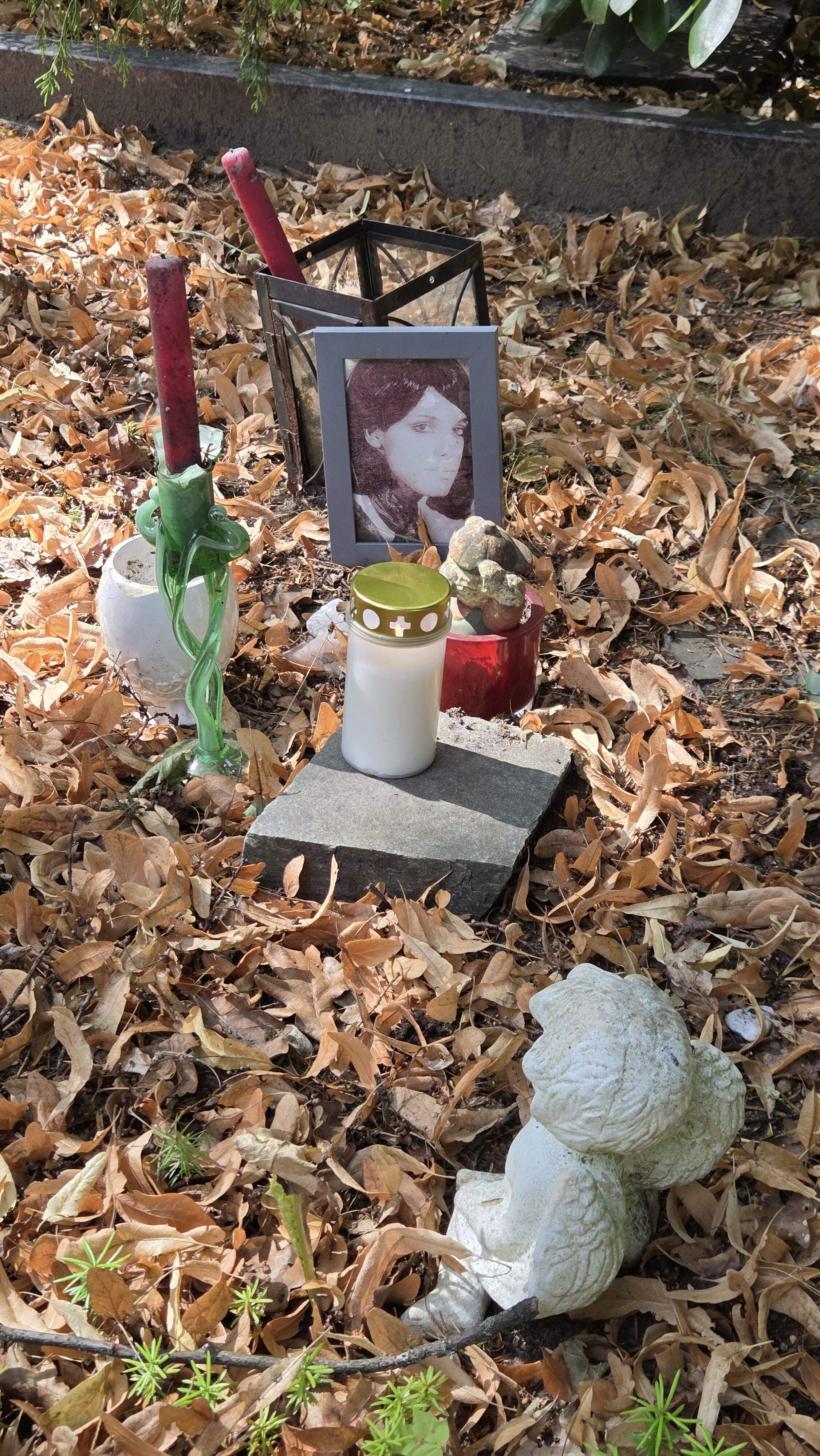
† 15. Juli 1971


Comments Off on † 15. Juli 1971

What can and cannot be discussed, or even mentioned

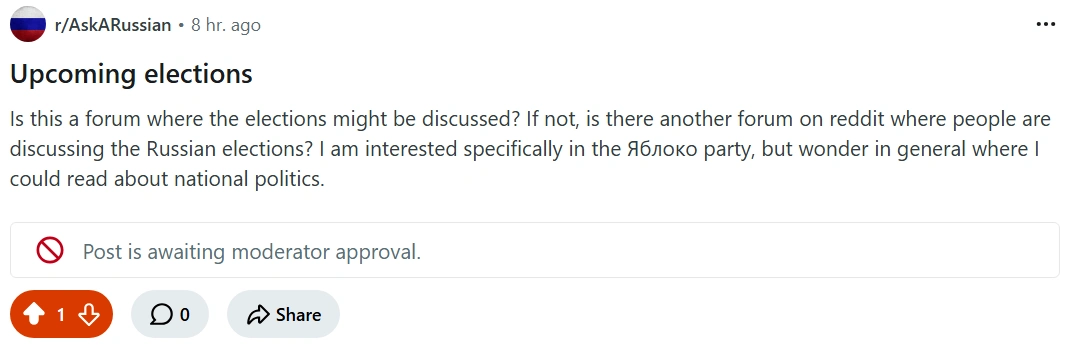
I am discovering it is difficult to find forums where Russian politics may be discussed with Russians in English. What is especially interesting is the extent to which the prohibition on discussion is also not explicit. I’ve had various posts on historical subjects not posted, or removed. People are eager to participate in language exchange, and say they will discuss anything – anything but politics. This when headlines in both western and Russian periodicals regularly carry news of the conflicts in Ukraine and the Strait of Hormuz.

What are people’s thoughts on this? Is it just how they will live their lives going forward? I believe issues must be addressed as realistically as possible, conflicts must be discussed in order to be solved.

Comments Off on What can and cannot be discussed, or even mentioned

Some of these things I just want to capture. I don’t know what to say about them. It’s just weird stuff. I imagine all the Federal employees involved with these things, the military people trying to execute policy. I continue to be amazed at the lack of resignations.

Comments Off on

AI and the false consciousness trap

Yanis Varoufakis:

Scientifically speaking, all that goes on is that microscopic perturbations yield macroscopic consequences. Their proliferation, or extinction, is an indirect by-product of that dynamic — nothing more. Causality abounds, but teleology, intent or consciousness do not.

…

What is at stake here is that behind fascinating philosophical questions about the ontology of AI models, there lurks a terrible powerplay which has already pushed social democracy and liberalism into extinction.

…

 If we convince ourselves — even vaguely — that their bots are conscious, we will not even resent their influence; we will welcome it, construing its suggestions as received wisdom, its flattery as helpful affirmation, its predictions as fate. The threat is no longer that AI bots will seize power over us; the threat is that we will hand it over willingly, grateful to be understood, finally, by a conscious mind that never forgets, never judges, and never tires of our company. The cage will be made of comfort, not coercion. Our slavery will be one we have consented to, enthusiastically.

Comments Off on AI and the false consciousness trap

Rheinmetall demonstration at Gesundbrunnen

I’m telling you: if I had 35 hours a week of paid employment I’d be all for these deep strikes in Russia with German missiles, but what with my hours being cut back I just don’t know about this whole Ukraine thing.

It seems to me very unlikely the Berlin police felt much fear. True, several of their number had gone to the hospital on Friday with injured hands after striking protesters who blockaded the Rheinmetall plant – see Tagesspiegel. Comparing social media posts with actual events is endlessly interesting to me. Brave graffiti proclaims “Widerstand” – “Resistance” to the production of weapons in Wedding, however to detect this it appears one must use a very sensitive ohmmeter.

Süddeutsche Zeitung:

Teilnehmer hätten sich vermummt, Pyrotechnik abgebrannt und strafbare Parolen ausgerufen. Zudem hätten mehrfach größere Gruppen versucht, in Richtung des Firmengeländes von Rheinmetall auszubrechen. 15 Menschen seien festgenommen worden. Gegen 19 Uhr hat die Polizei die Versammlung beendet.

Comments Off on Rheinmetall demonstration at Gesundbrunnen

Zwei verletzte Polizisten bei Protest vor Rheinmetall in Berlin-Wedding

Tagesspiegel:

Ein Polizeisprecher sagte dem Tagesspiegel, dass es sich bei der morgendlichen Aktion nicht um eine angemeldete Versammlung gehandelt habe. Die Behörde habe „körperlichen Zwang“ anwenden müssen, um ein Blockieren des Firmengeländes zu verhindern. Zum Einsatz seien „Tritte, Schläge sowie Pfefferspray“ gekommen, sagte der Sprecher. In der Auseinandersetzung mit den Demonstranten seien zwei Beamte an der Hand verletzt worden. Sie konnten ihren Dienst nicht fortsetzen und mussten ins Krankenhaus gebracht werden.

Comments Off on Zwei verletzte Polizisten bei Protest vor Rheinmetall in Berlin-Wedding

Rheinmetall Stoppen!


Volkspark Humboldthain. This is a couple hundred people organizing against a Rheinmetall weapons factory in Wedding. I sat in the blue and white tent for 20 minutes or so and listened to discussion. Really nice group. Everybody, literally, speaking or asking questions, received applause. The temperature is very pleasant today. It is sunny but not hot. There is a nice breeze. It is a beautiful day to be in the park.

Interestingly when I walked around and looked at posters there were numerous different statements against weapons manufacture, however I didn’t see the words “Gaza” or “Ukraine” once. The objection to weapons manufacture appears to be about the expense: Geld für unseren Kiez, nicht für Waffen! Kein Profit mit Völkermord! If only it were cheaper to blast apart Palestinian apartment blocks with German anti-tank missiles.… 🤔 Perhaps weapons production as a non-profit? I could get behind Völkermord if it were less expensive.

Comments Off on Rheinmetall Stoppen!

Comments Off on

Acknowledging what exactly has been lost

Isabella Hammad, Equator:


as Freud himself argued in Mourning and Melancholia, proper mourning requires a person to acknowledge what exactly they have lost. If a loss is not brought into the full light of consciousness, grief curdles into melancholia. Stopping to perceive the traces of what is there no longer, then, precisely enacts the psychic movement of looking, acknowledging, and then, eventually, separating.

Ω Ω Ω

Crucially, mourning requires a person – whether as a child or as an adult – to recognise that they are not omnipotent, that they are capable of being bad and of having destructive thoughts. In other words, mourning involves not only coming to terms with your lost or departed loved object (or beloved), but also with your own vulnerability and finitude.

Ω Ω Ω

Witnessing, or looking and weeping, did not stop the atrocities, and the proliferation of images may even have conditioned people to normalise them, as they look at another mangled corpse covered in dust on a phone screen and then inevitably continue with their day. There have been other genocides in the history of our species; what has made this different seems to be the flagrancy with which it has been conducted, recorded and abetted.

How plainly we see the future, continuous with our past: casual, industrial-scale warfare perpetrated with a lucid sadism, powers that care neither for the Earth nor for other human beings, a world increasingly in ruins, dominated by a technocratic elite that considers entire populations disposable, and has the power to dispose of them.

Ω Ω Ω

The memorialising of the Nazi Holocaust in museums and other forms of pedagogy in the West seems designed to facilitate, in Naomi Klein’s words, not “re-membering” but rather re-traumatisation. “Looking back,” she writes in Doppelganger, “I am struck by what wasn’t a part of these strangely mechanical retellings. There was space for the surface-level emotions: horror at the atrocities, rage at the Nazis, a desire for revenge. But not for the more complex and troubling emotions of shame or guilt, or for reflection on what duties the survivors of genocide may have to oppose genocidal logics in all of their forms.” This is not mourning: this is a wound kept purposefully open to preclude reflection and justify genocidal violence through the logic and rhetoric of an ontological victimhood.

Ω Ω Ω

The US built many army bases around the world, but the exercise of American imperialism did not require the same kind of colonial architecture as the old European empires. US military interference was most often conducted covertly or by proxy, through the funding of militant opposition groups, assassinations and the indirect facilitation of coups d’etat. Meanwhile, the bulk of Cold War “containment” policies consisted in a strategy of soft power, including economic and cultural influence.

Ω Ω Ω

Decades later, as US soft power is being rapidly dismantled, the disproportionate influence of American ideology suddenly appears obvious. Where the Biden administration expressed a final croaky gasp of a hypocritical establishment, still verbally committed to values like democracy and goodwill – a mask that was revealed to be very slippery indeed during Biden’s unrelenting funding of Israel’s genocide in Gaza – the Trump administration demonstrates little ideological consistency beyond the maskless slogan “America First”. It was always America first; they just used to be more quiet about it.

Ω Ω Ω

Israel’s accelerated genocide of the Palestinians made the contradictions in the US’s imperial architecture unbearable and untenable, and threatened it with collapse, setting into motion a process of destruction that we are still trying to look at, and that is sometimes hard to see.

As we look upon burned flesh in Gaza, we are also seeing the rubble of this older version of Western empire. How best to splice the frame, to keep them both in mind, to keep looking?

I am very much struck by these last paragraphs being written in the past tense: “the exercise of American imperialism did not require”, not “does not require”. This is the first time I believe I have seen this. But yes, with Biden’s Gaza and Trump’s Iran War following Bush’s 2003 invasion of Iraq the American Century truly is over.

Comments Off on Acknowledging what exactly has been lost